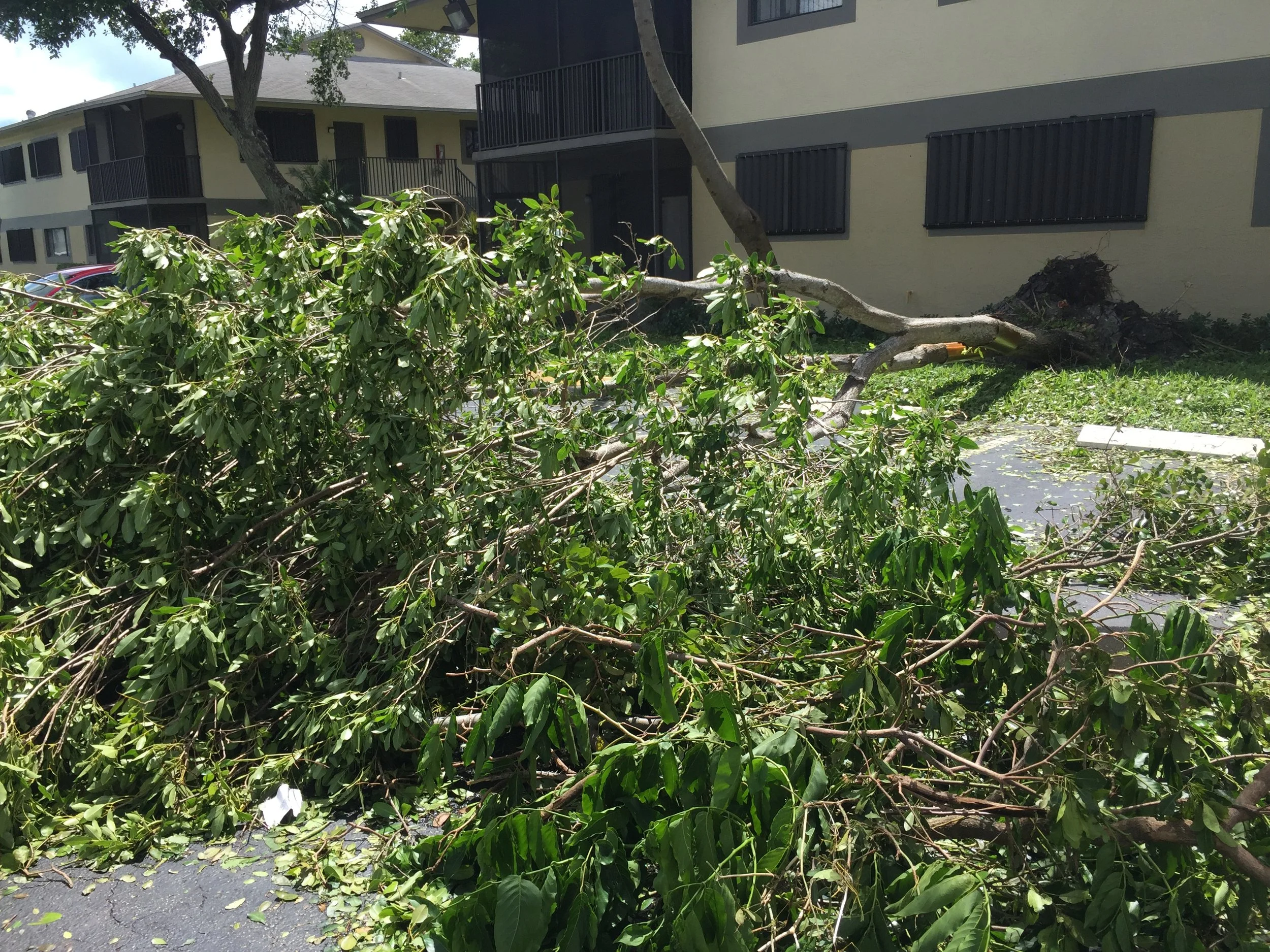
The power of Mother Nature supersedes any mankind structure. Careful thought and proper maintenance must be provided to extend structures resiliency and serviceability.
The power of Mother Nature supersedes any mankind structure. Careful thought and proper maintenance must be provided to extend structures resiliency and serviceability.
Natural hazards and severe weather conditions surrounding the building infrastructure greatly affect the durability and serviceability of structures. Engineers must have a solid understanding of how these natural conditions affect structures and hence provide a timely preventive report that will be essential to avoid collapse of such structures. Examples of these environmental factors are described in the following sentences and illustrations below.
Thermal shock
Expansion, Shrinking and stretching are three crucial problems encountered in building materials due to large thermal differentials between the interior and the exterior. In the roofing business, a well specified roof system can handle this critical part, such as on an August afternoon and a rain shower hits during an otherwise bright sunny day. This is extreme temperature fluctuation. The roofing cross section between the exterior and interior of a building is not that thick. On top of the roof it can range in temperature from as high as 180 F° during mid day to as low as well below zero at night, and the under side is usually at 72° F which the right insulation can handle. However, thermal dynamics move the roof 24/7.
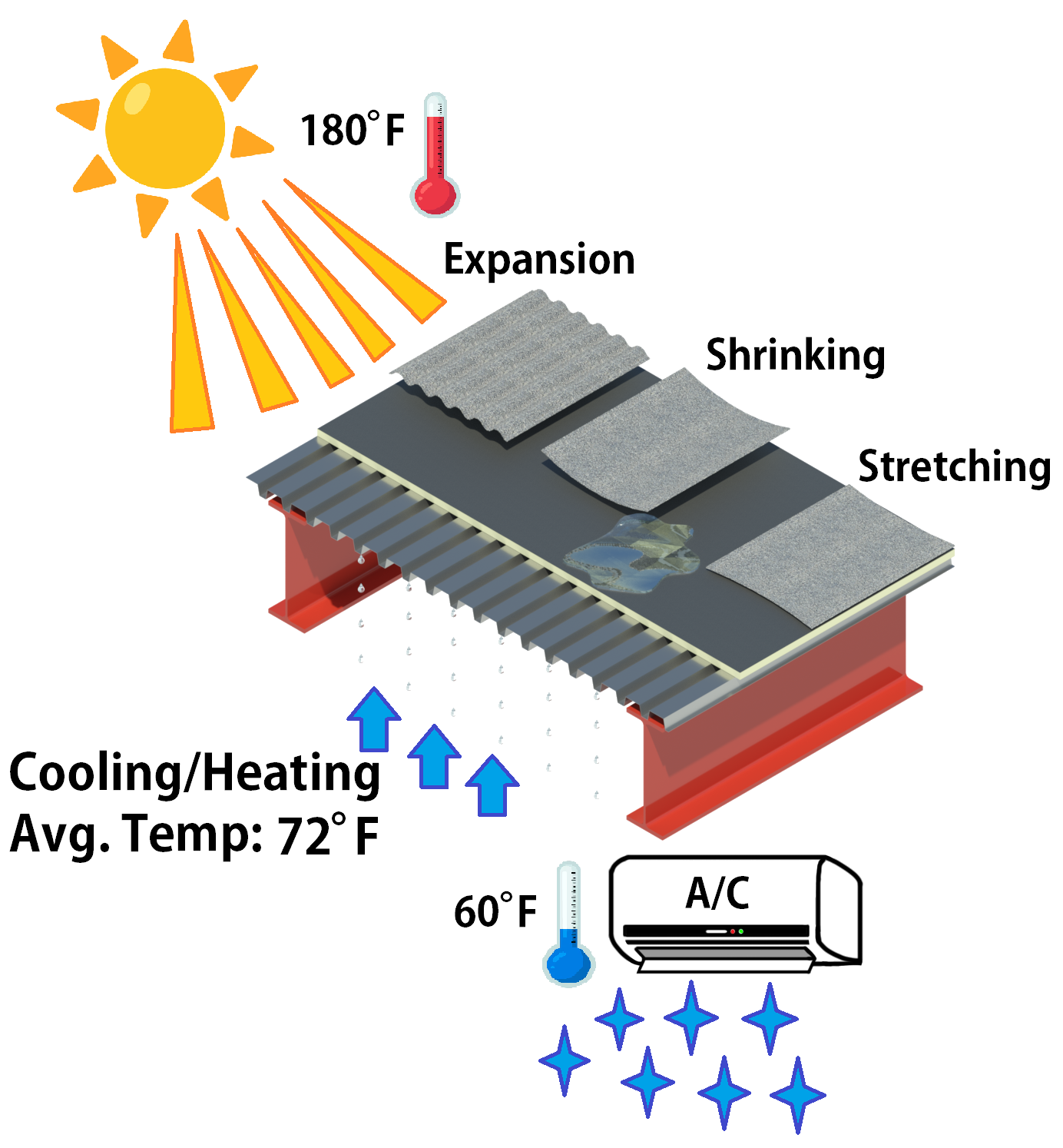
Temperature difference at building roof interface between interior and exterior environment
Moisture infiltration = Material deterioration
Going and coming requires the material system to flex substantially because of the thermal movement from top to bottom. The daily movement of roof materials due to heating up and colliing down will cause materials to deteriorate over a period of time. How well the design is, and how well the installation is, along with proactive maintenance will determine the longetivity of the roof system.
Alligatoring of unshielded asphalt on smooth-surfaced built-up membrane betrays the hazards of leaving the asphalt glaze coat unprotected by a light reflective coating.
Punctures in the membrane can be caused by any number of sharp objects. Too much traffic to service mechanical equipment or heavy objects dragged over the roof, plus hailstones can penetrate the surface. If discovered promptly and repaired, fine, ptherwise the next storm puts water into the substrate causing further damage and failure. If discovered promptly and repaired, fine, ptherwise the next storm puts water into the substrate causing further damage and failure.Vegetation growing out of the roof signals a punctured roof and water retention, not to mention poor or no maintenance.
Periodic inspections can detect defects in time to facilitate corrective action for your roof and keep warranty valid.
If damage goes undetected and water gets in, you could have further damage from entrapped moisture, feeding the formation and growth of mold, mildew and fungi. That could subject building occupants to serious and permanent health problems, and subject the building owner to possible costly litigation and expensive remediation. There are several field test procedures available to help determine the condition of a roof, so that decisions can be made as to quantity of repair maintenance and/or re-rrofing required for your building.
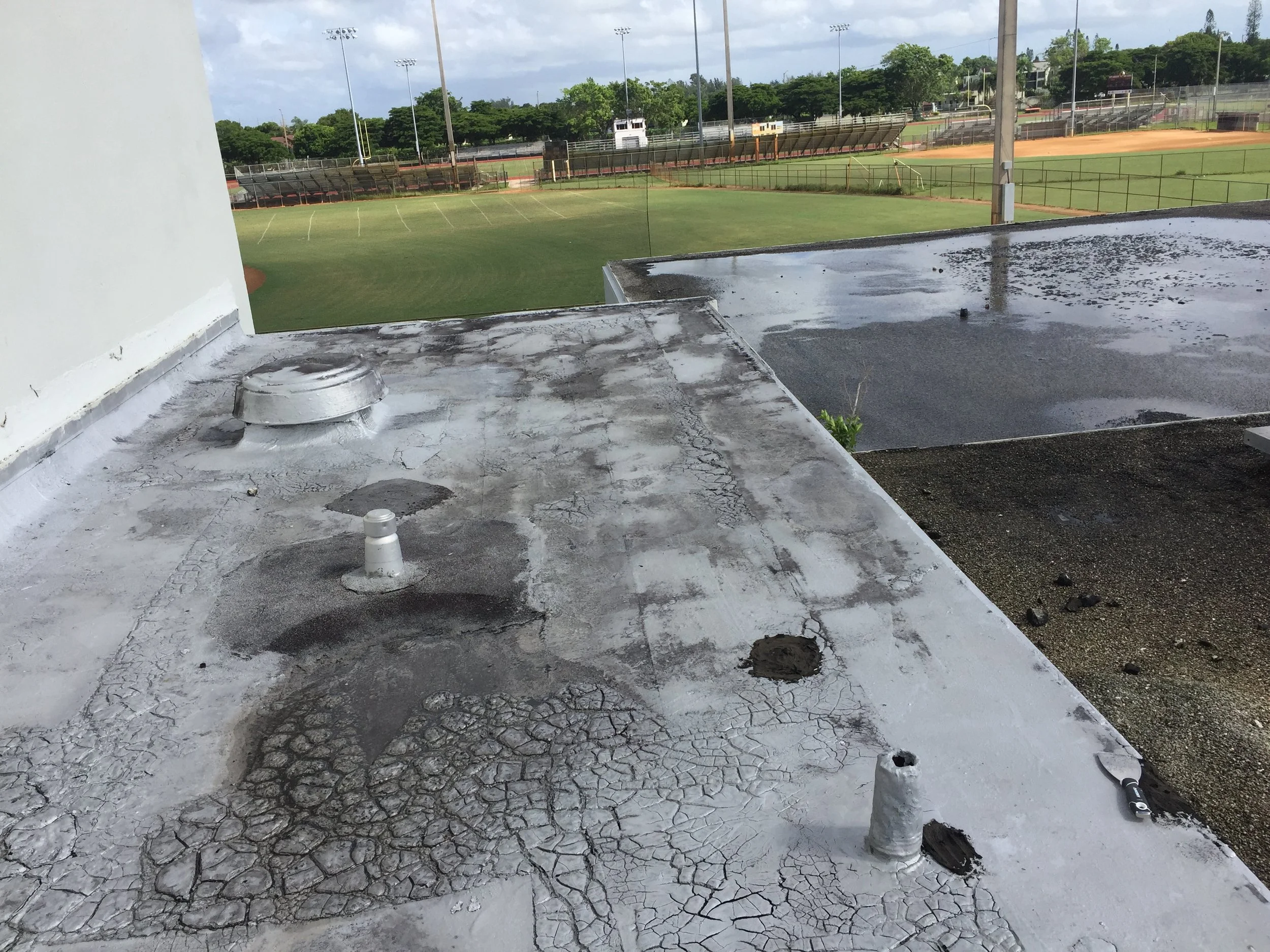
Alligatoring in roofing surface
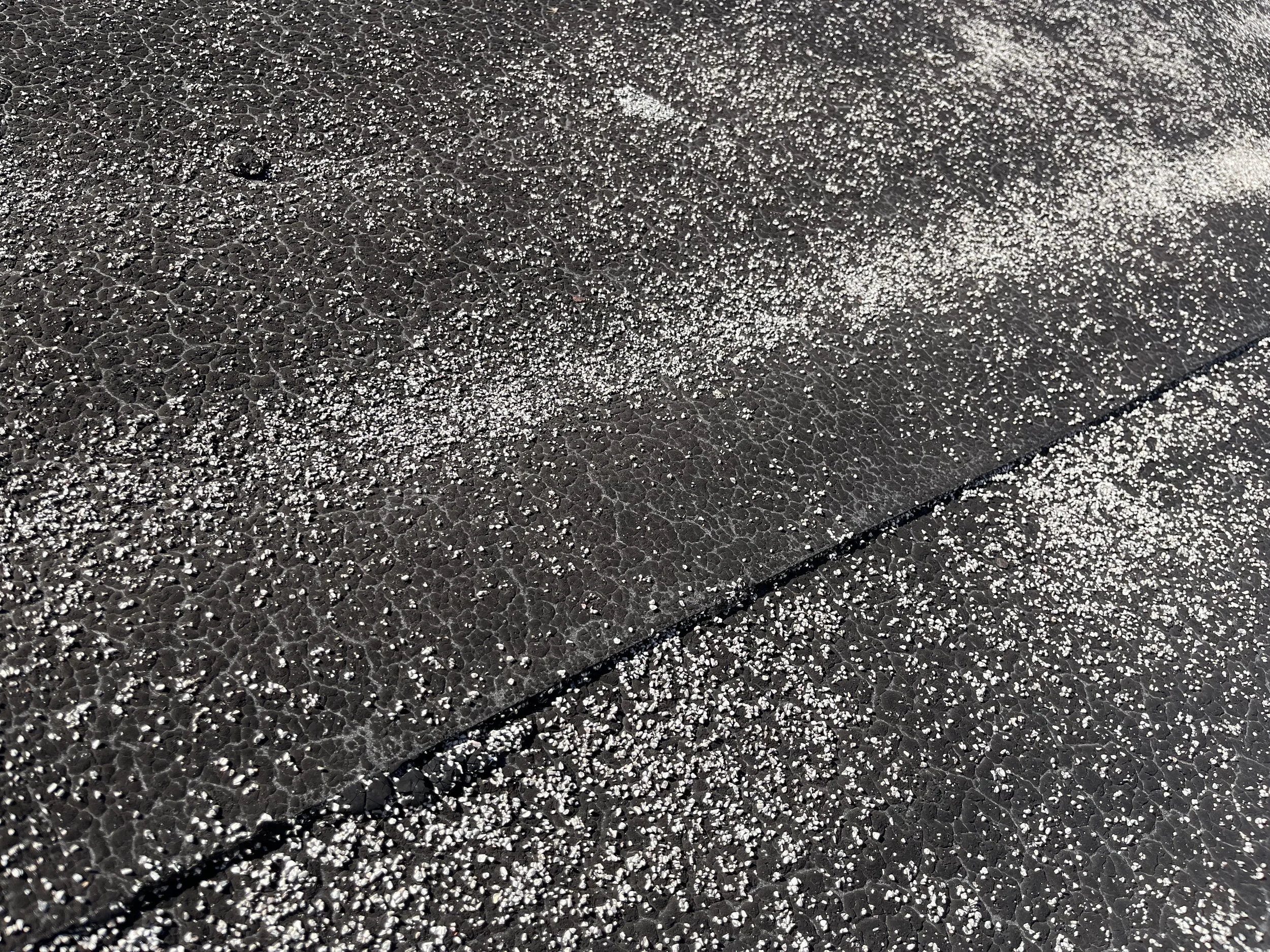
Weathering, aging, scour, granula loss and surface wear-off
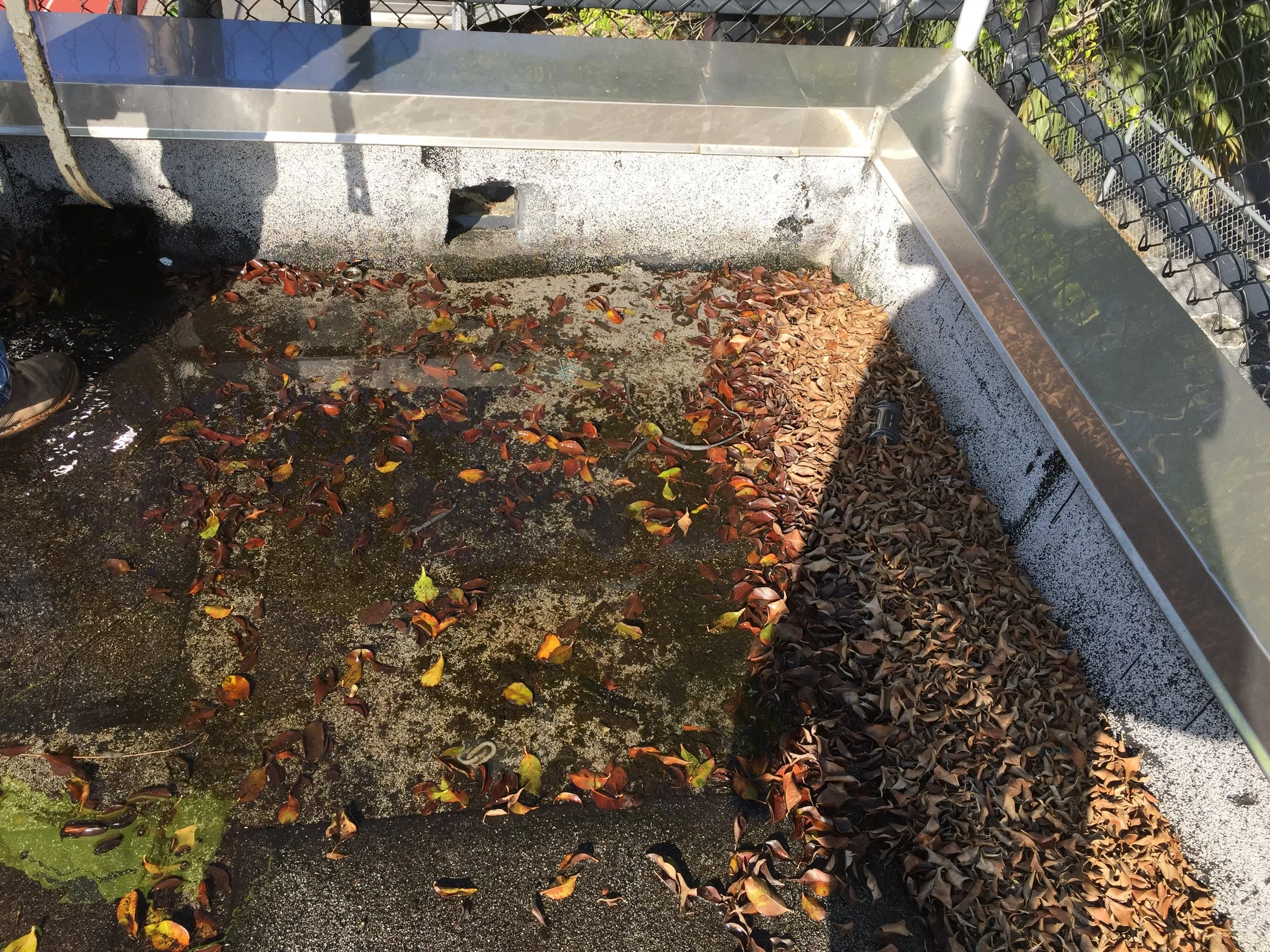
Moisture infiltration causing growth of micro-organisms such as vegetation, mildew, mold spores and fungi
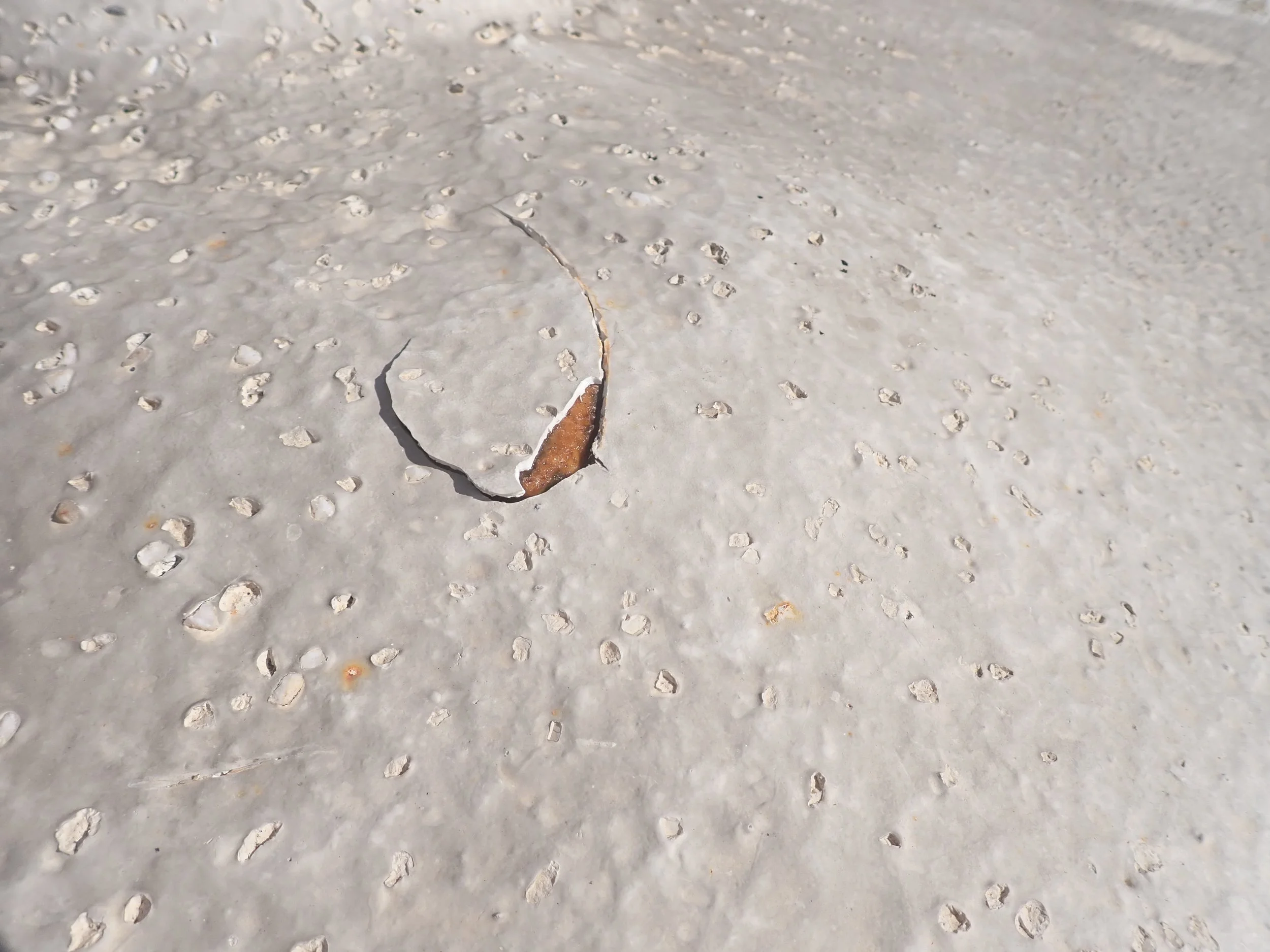
Punctures in roofing membrane
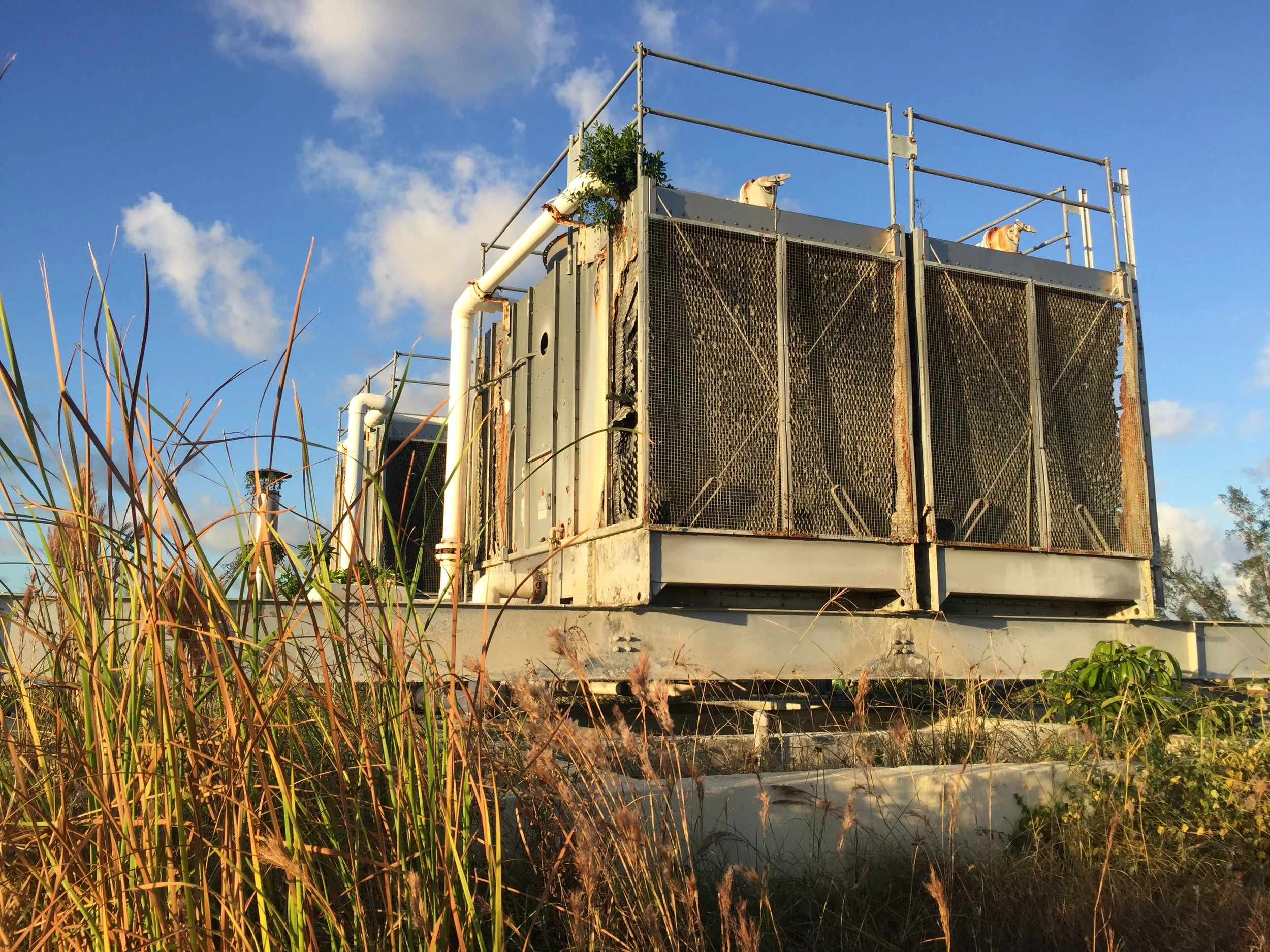
Large vegetation growth in abandoned and punctured roofing system
Wind uplift
Wind uplift is critical at the roof perimeter zone, especially at the corner zones. Wind, especially at high velocity zones, creates vacuum or negative pressure, lifting the membrane, roof blow-offs and roof insulation material loose from the fastenings. High winds can also cause flying debris which can damage membrane and roof top equipment.
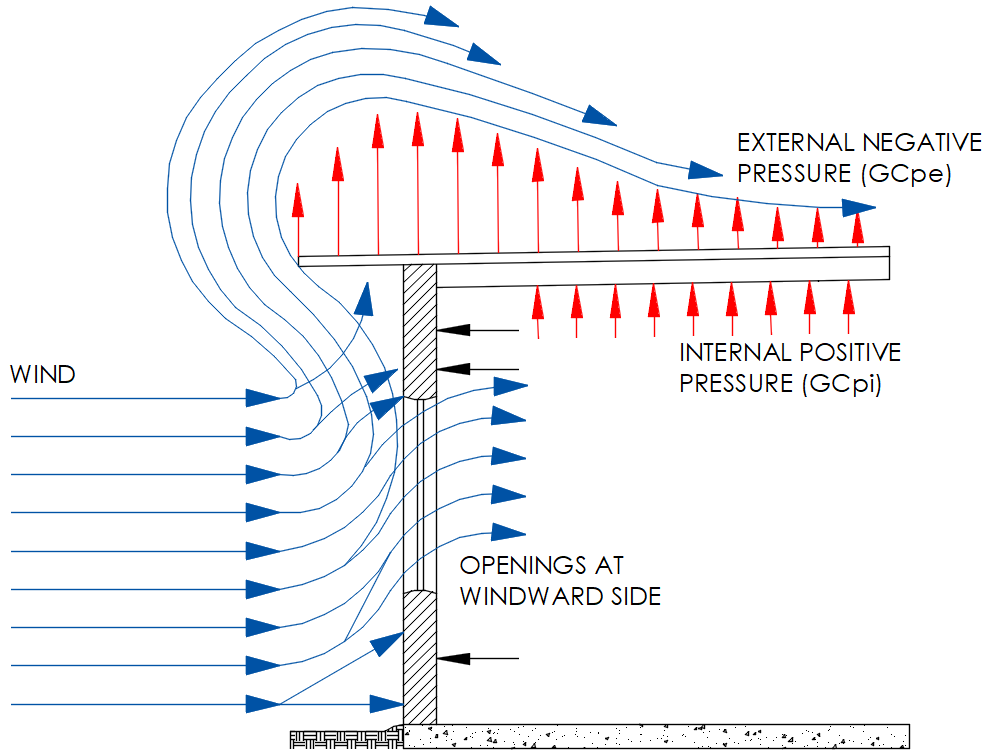
Wind-building interaction showing uplift suction pressures
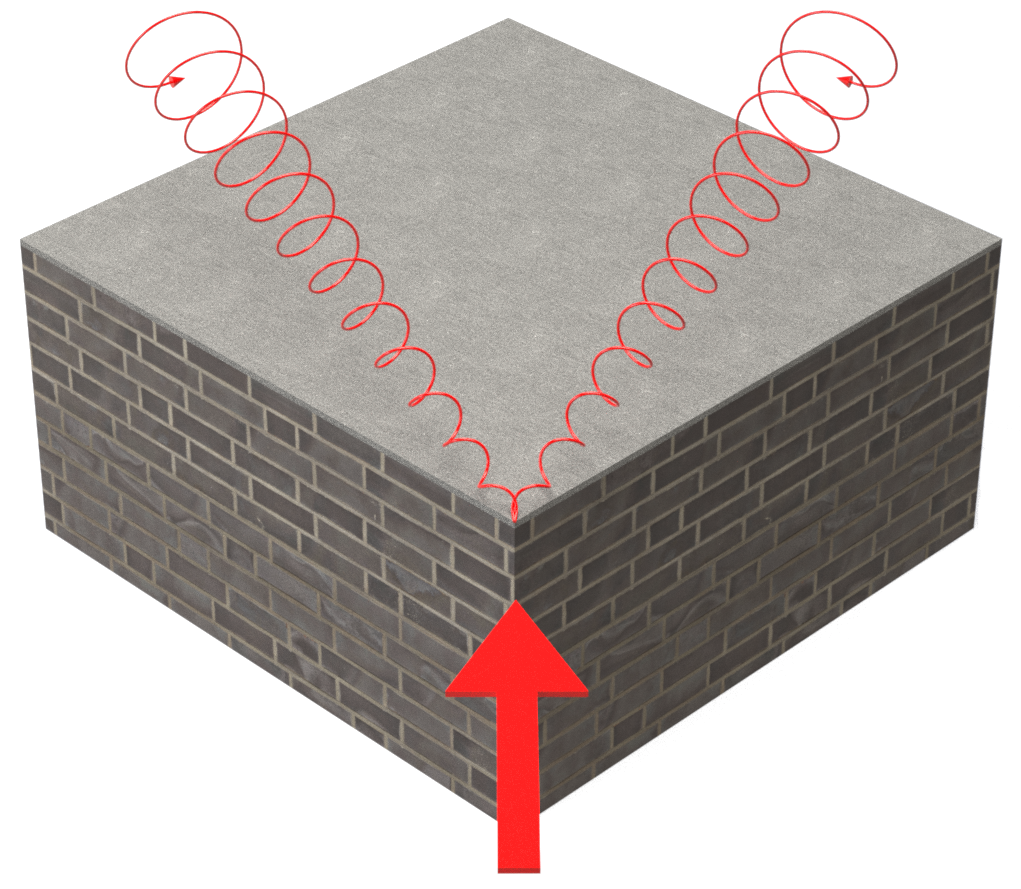
Conical vortices develop from quartering incident winds at the roof resulting in large suction pressures
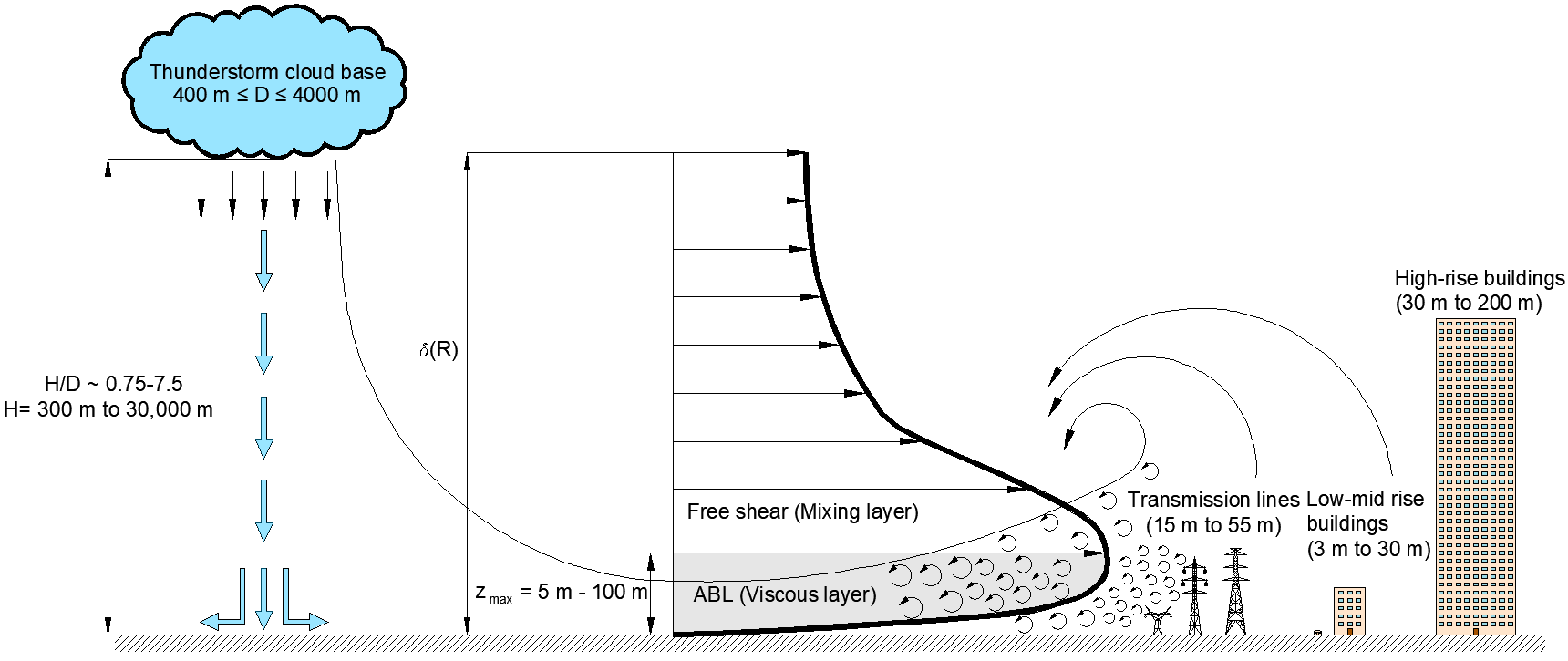
There are two types of wind affecting the infrastructure. Synoptic, Atmospheric Boundary Layer (a.k.a. ABL or straight line winds winds like Hurricanes) and Mesoscale localized winds such as downbursts and tornadoes. Currently the ASCE 7 code only takes into consideration the analytical and simplified procedure to obtain pressure coefficients, Cp for design purposes for ABL winds. Tornadoe design criteria has recently been incorporated in the ASCE 7-22 code. However, downbursts winds are still in a research phase as there are still many unknowns to still be studied. For this reason, it is important to work with the latest ASCE 7 design code and use engineering judgement to select a safe design and appropriate structural connection.
Consideration of the Saffir-Simpson Hurricane Wind Scale must be given where a 1 to 5 rating system classifies the hurricanes categories by their maximum sustained wind speed, estimating potential property damage, with higher numbers indicating stronger winds and more severe impacts like roof damage, tree loss, and extended power outages, though it doesn't account for rainfall or storm surge. Categories 3, 4, and 5 are considered major hurricanes due to their potential for devastating wind damage, but all categories pose life-threatening risks, requiring preparation and action. Category 5 hurricanes can reach one minute average wind speeds of 157 mph or higher.
A ‘3-second gust’ is the peak wind speed measured as a 3-second average, which is a standard term in wind engineering representing intense, short bursts of wind used for designing buildings and structures, often significantly faster than sustained winds, and measured at 10 meters above ground. This nomination helps engineers account for severe conditions like those found in hurricanes, with speeds typically higher than the mean wind speed, hence making it a crucial factor in load calculations. In Structural design, the 3-sec gust captures the intense, short-duration wind forces that can cause significant damage, substantial blow-off and providing a realistic worst-case scenario for engineering.
The wind-building structure interaction is important as it involves complex aerodynamics of wind flow through the building which generate conical vortices. These conical vortices known as 'eddies' will create suction (i.e. negative) pressure coefficients higher in certain building surfaces than others, specially at quartering wind angle directions (i.e. 45 degrees coming form the horizontal direction and hitting at the sharp corner of the roof). For this reason, a roofing and any other building component selection methodology can be challenging as it requires a complete analytical calculation to check several parameters before selecting a roofing system that best meets and exceeds the demand criteria for wind uplift. South Florida have the most severe wind uplift pressures in the nation and is known to be a high-wind velocity and hurricane prone zone, especially in the vicinity of the coast line. For this reason, roofing systems with their own specified fastening pattern have been tested in accordance with FBC: TAS 114 App. J (24 ft by 12 ft simulated wind uplift pressure chambers) and given a specific wind uplift pressure rating known as the "Design Pressure". These Design pressures test results have been approved by the Miami-Dade County Building Code Officials for each specific roofing system and they have been assigned a product approval number, commonly referred as "NOA Number" which translates into Miami-Dade number of acceptance number. When selecting a roofing system for South Florida, the designer must gather basic information of the roof such as the height, dimensions and location in order to have a Florida Registered Professional Engineer calculate these roof pressures on the field, perimeter and corner zones of the roof. Once these demand pressures are known, then they will have to be compared against the NOA Design Pressure ratings. This process will give the designer an idea of what roofing system is applicable and should be able to select it based on the fact that the NOA Design pressure rating must be higher than the calculated demand uplift pressures. Each roofing fastening pattern of a roofing system in the NOA have a unique design Pressure rating. In some instances, the NOA allows to have the Design Pressure rating be higher than the field zone uplift pressure only only if the NOA specifies that the roofing system has a "Limitation #7", thus allowing to extrapolate a number of fasteners in perimeter and corner zones that exceed the design pressure rating. In other cases, if the NOA specifies that the roofing system has a "Limitation #9", then the NOA allows the Design Pressure must be higher in all roof field, perimeter and corner zones thus not allowing extrapolation of fasteners. Limitation #7 is usually applicable for new and re-roof systems that are mechanically fastened. On the other hand, Limitation #9 is applicable for "Re-cover" or Adhered systems. Please click in the following button to refer you to the Miami-Dade Link that will list all the high-wind velocity approved systems that have been tested and assigned a wind design pressure rating to help you select your construction and roofing system of your choice.
With the information at hand, at Calcudraft Engineering, we can run a preliminary wind pressure analysis and help you select a construction assembly or roofing system that best meets or exceeds the wind pressure uplift demand occuring in your project’s geographical location. We can prepare a quick analysis of your building system and any consultation free of charge to help you make an appropriate decision. We are here to help and assist you.
Tornadoe loading
Tornadoes are storms containing the most energetic and powerful winds amongst all other winds. The probabilities of occurrence of tornadoes occurring at a paticular location are very low compared to those other extreme winds such as Hurricanes that have larger diameters covering horizontal areas in the range of 200 to 500 km wide. It is therefore considered that the cost of designing structures to withstand tornado effects is significantly higher than the expected loss associated with the risk of a tornado strike. However, the consequences of failure of essential facilities under tornados could be very serious. Thus it is important to have standard requirements for tornado-resilient design of essential facilities, such as fire stations, police stations, hospitals, and nuclear power plants. Survival of these structures is considered essential from a community resilience point of view. Thus it is also necessary to have measures in place (e.g. shelters and safe rooms) that can help reduce the number of victims in case a tornado occurs. The Rankine vortex is a simplified representation of tornado wind speeds impacting the structures tangetially and greatly toppling down structures.
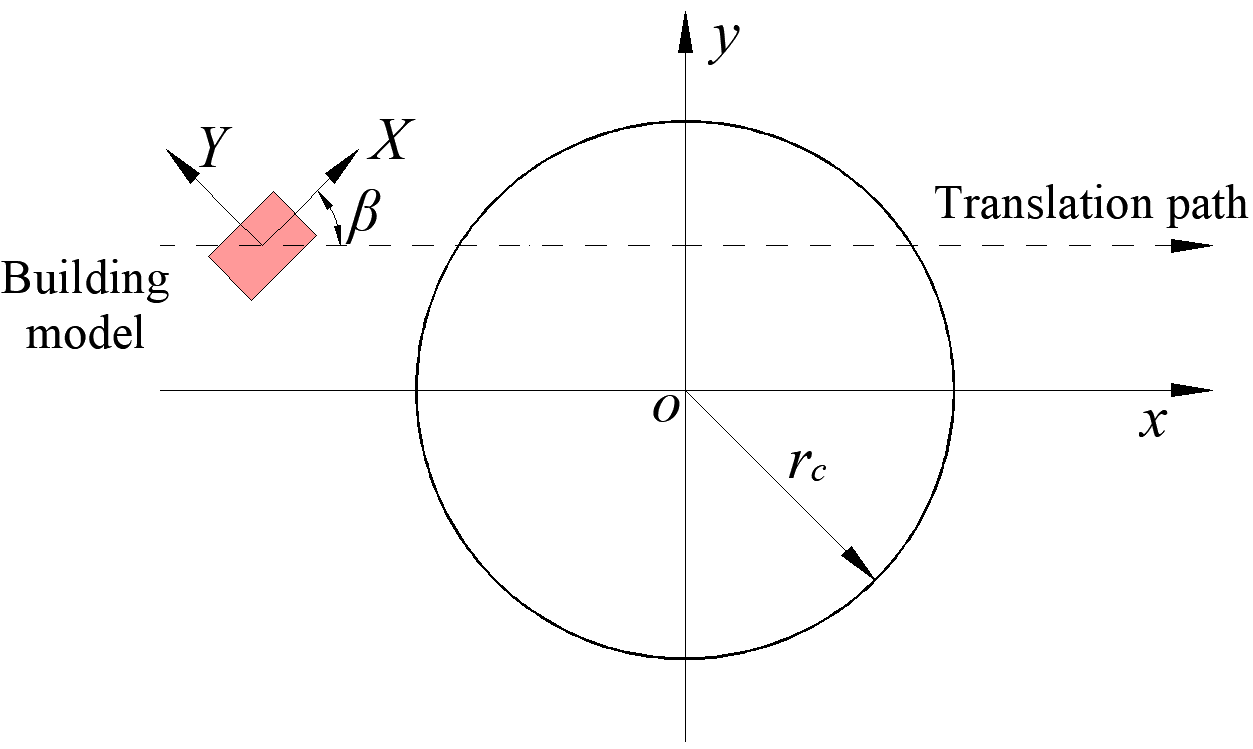
Tornado Rankine model affecting a building model by rotation and translation
Ponding water
Ponding water creates tremendous problems to a building structure and several have collapsed as a result. 1 square foot of water, 1 inch deep weighs 5.2 lbs. The maximum depth of water allowed by code is 5 inches weighing 26 lbs per square foot. There are 3000 roof collapses a year in the USA, many because of inadequate drainage.
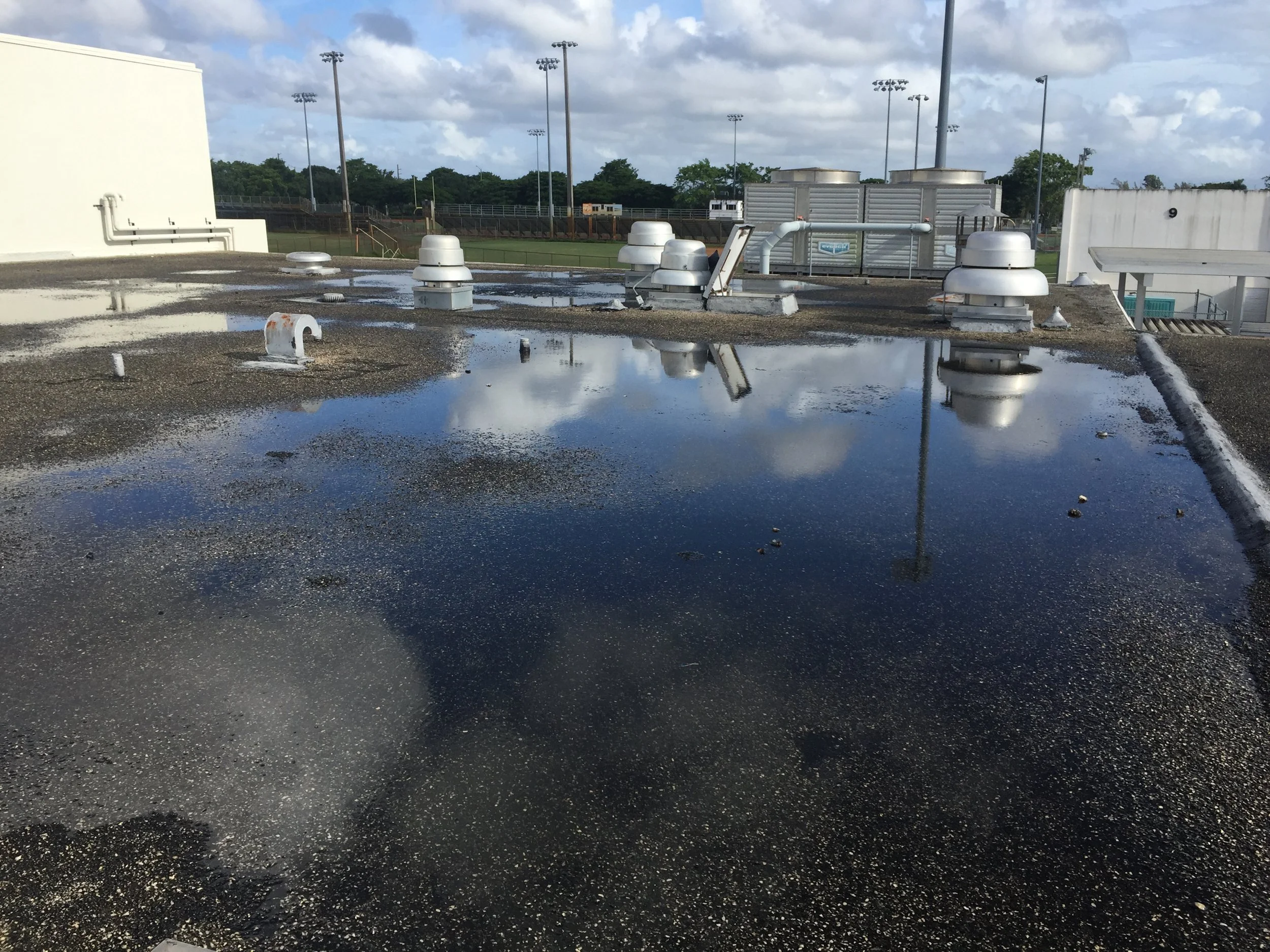
Excessive ponding due to poor drainage
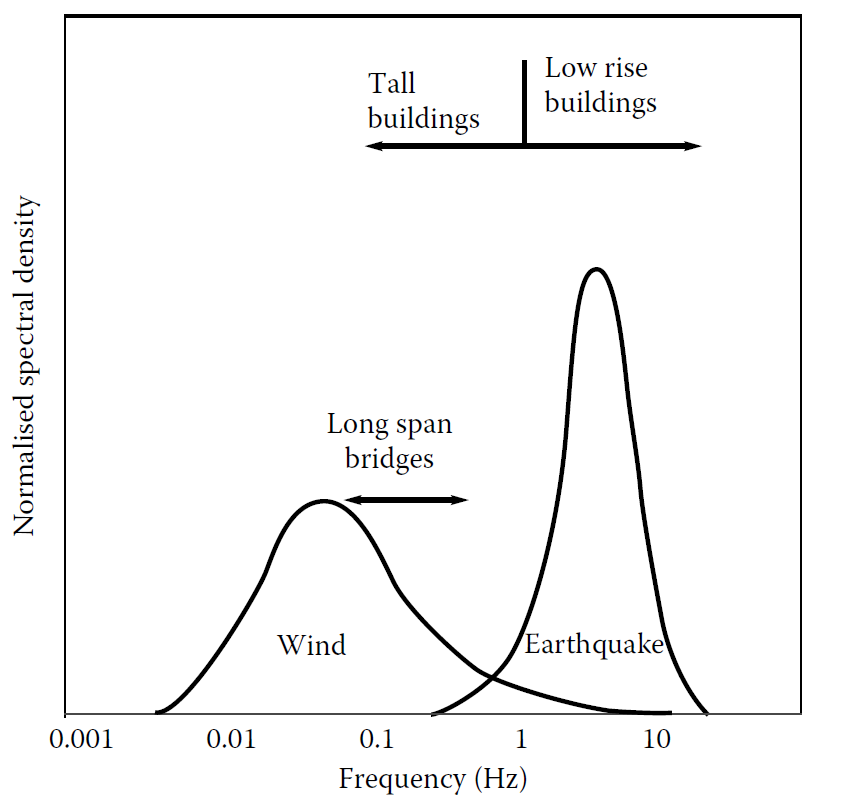
Normalized spectral density comparison between wind and earthquake loading
Natural hazard finder
To find wind speeds or any other natural hazard by geographical location, click in the following button:
These tools allow you to input a specific address to get data for different ASCE 7 code editions (like 7-16 or 7-22) and determine the required Risk Category (I-IV) for your building, which dictates design wind speeds based on building importance, like essential facilities (Risk Category III) needing higher wind resistance.
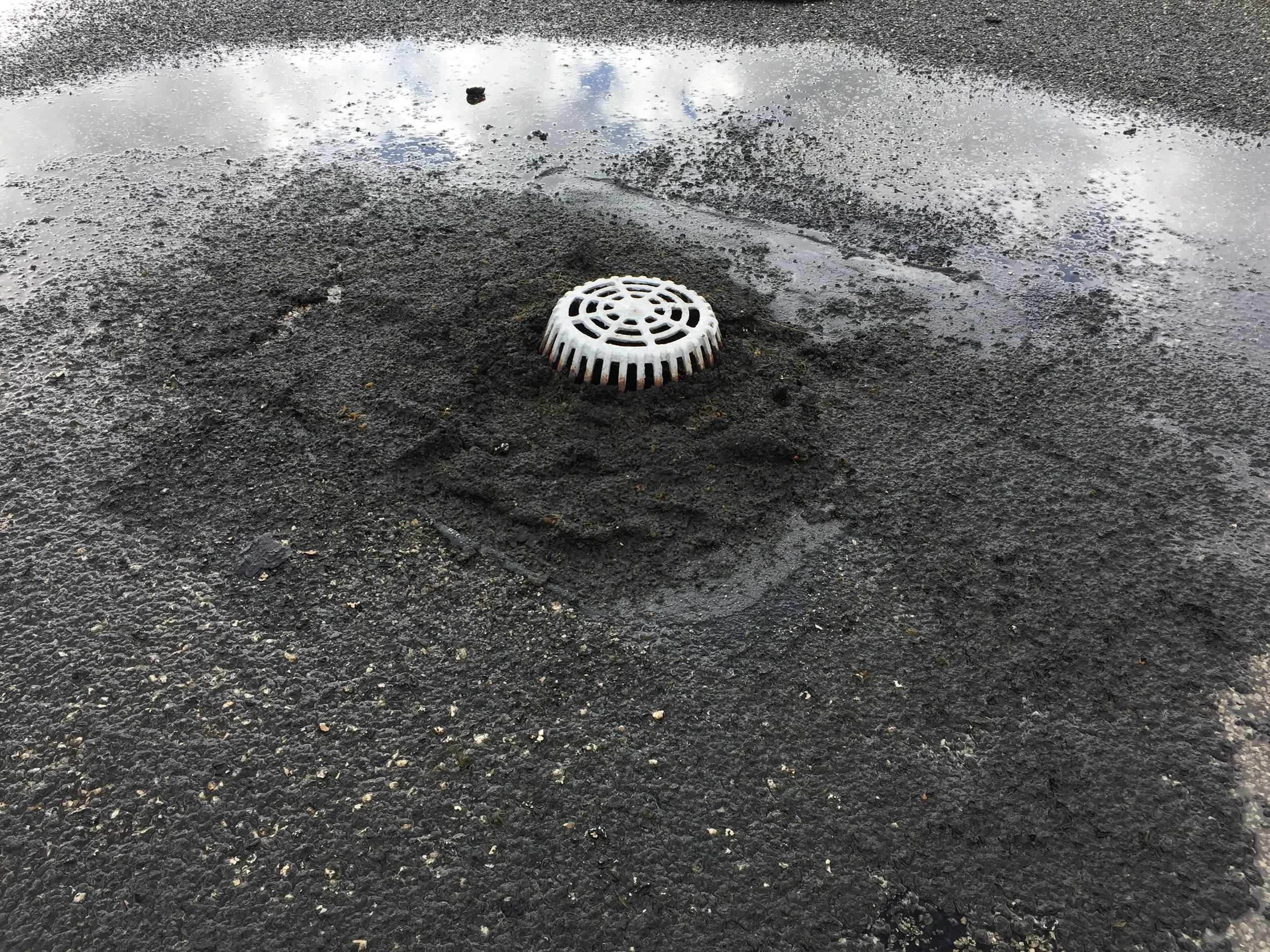
Clogged drain allowing severe ponding
Seismic design
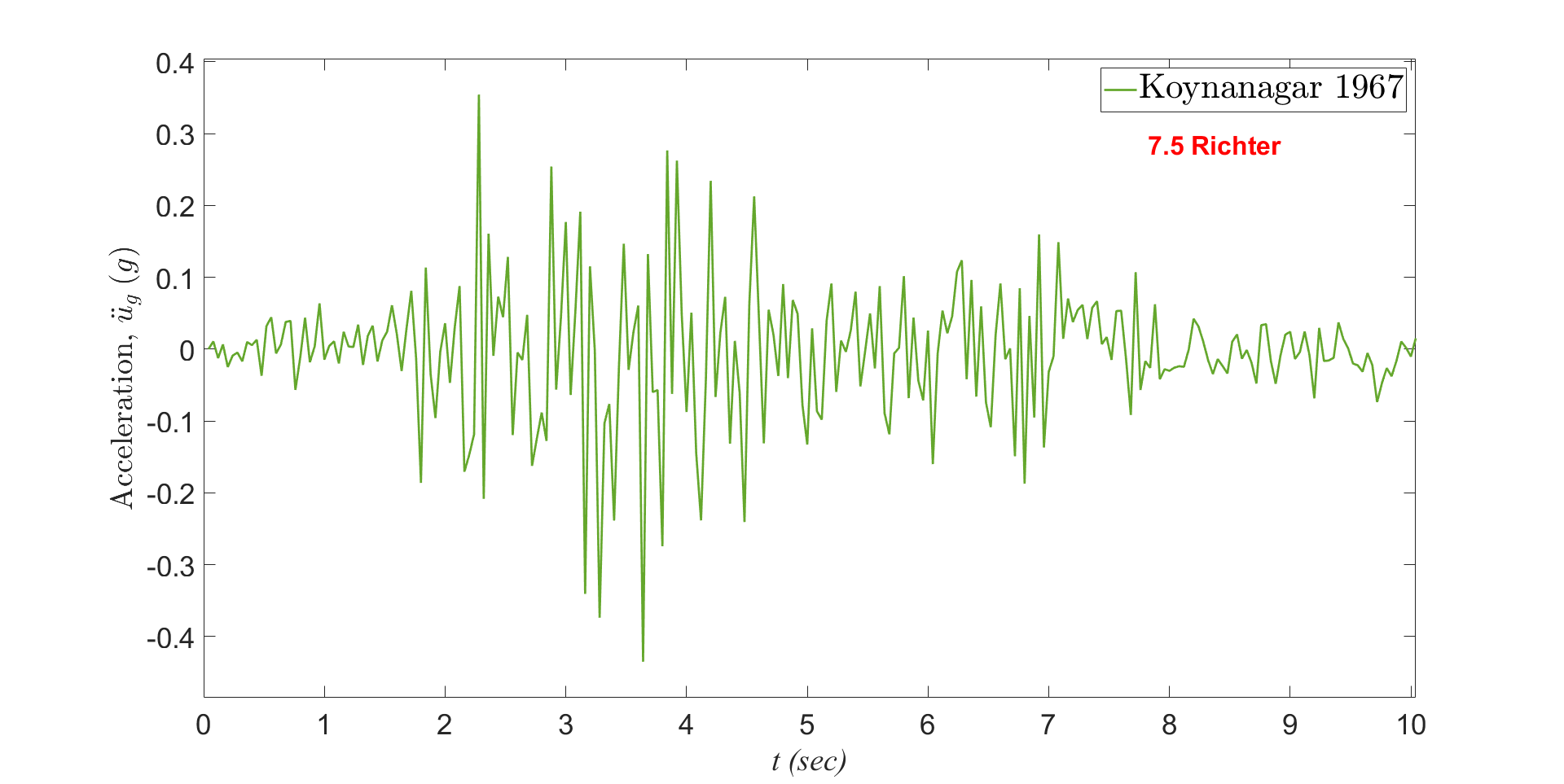
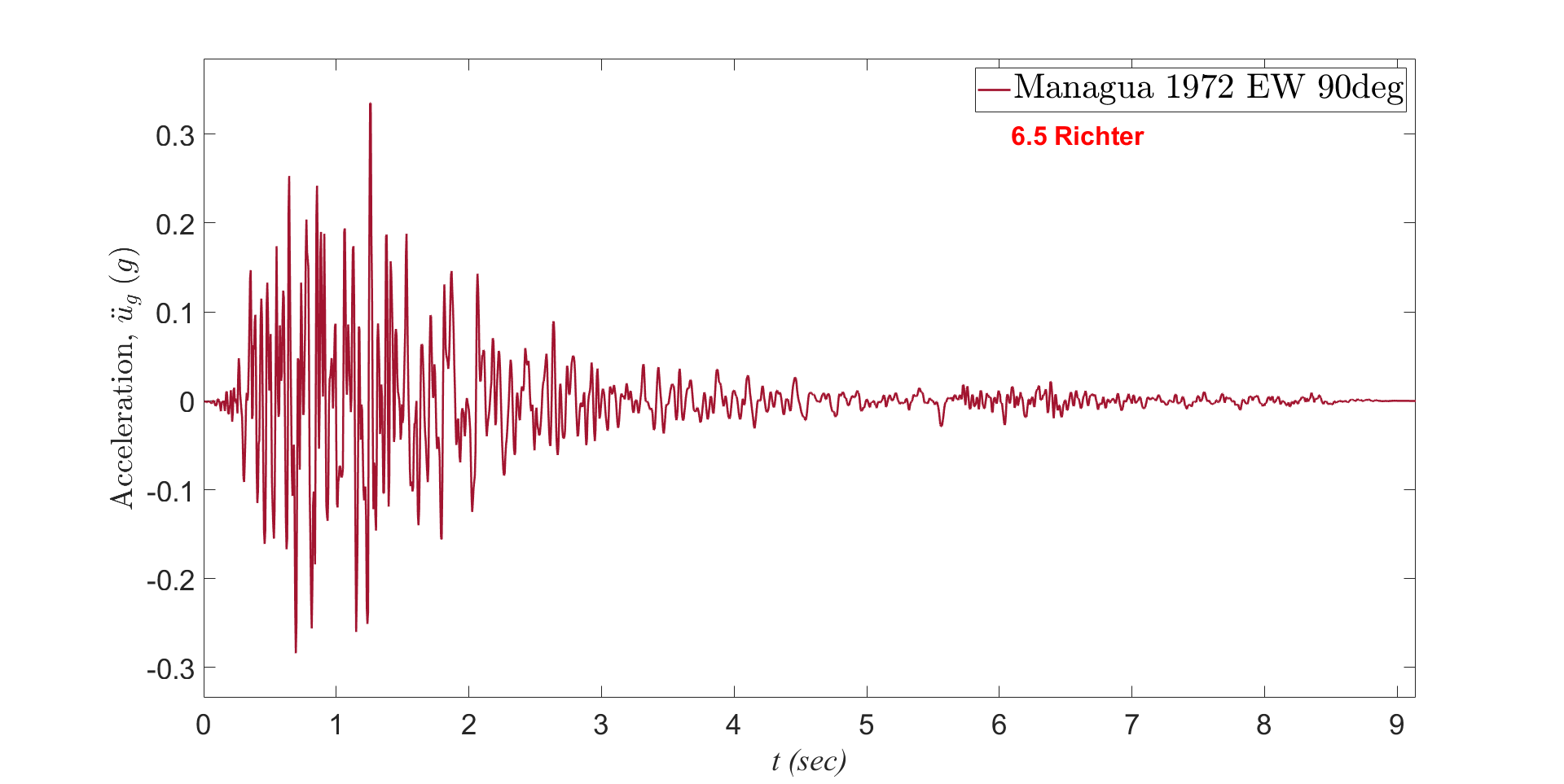
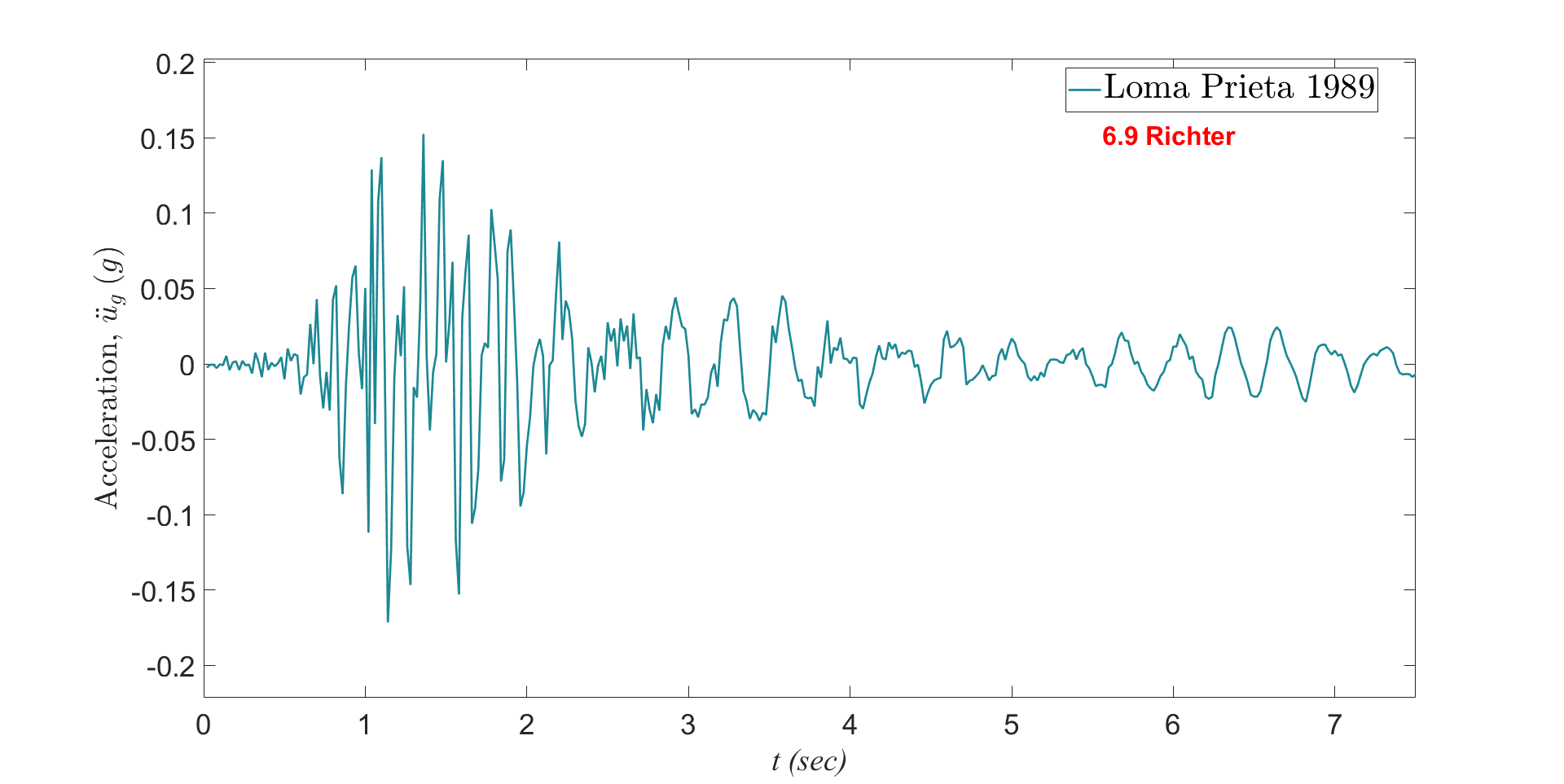
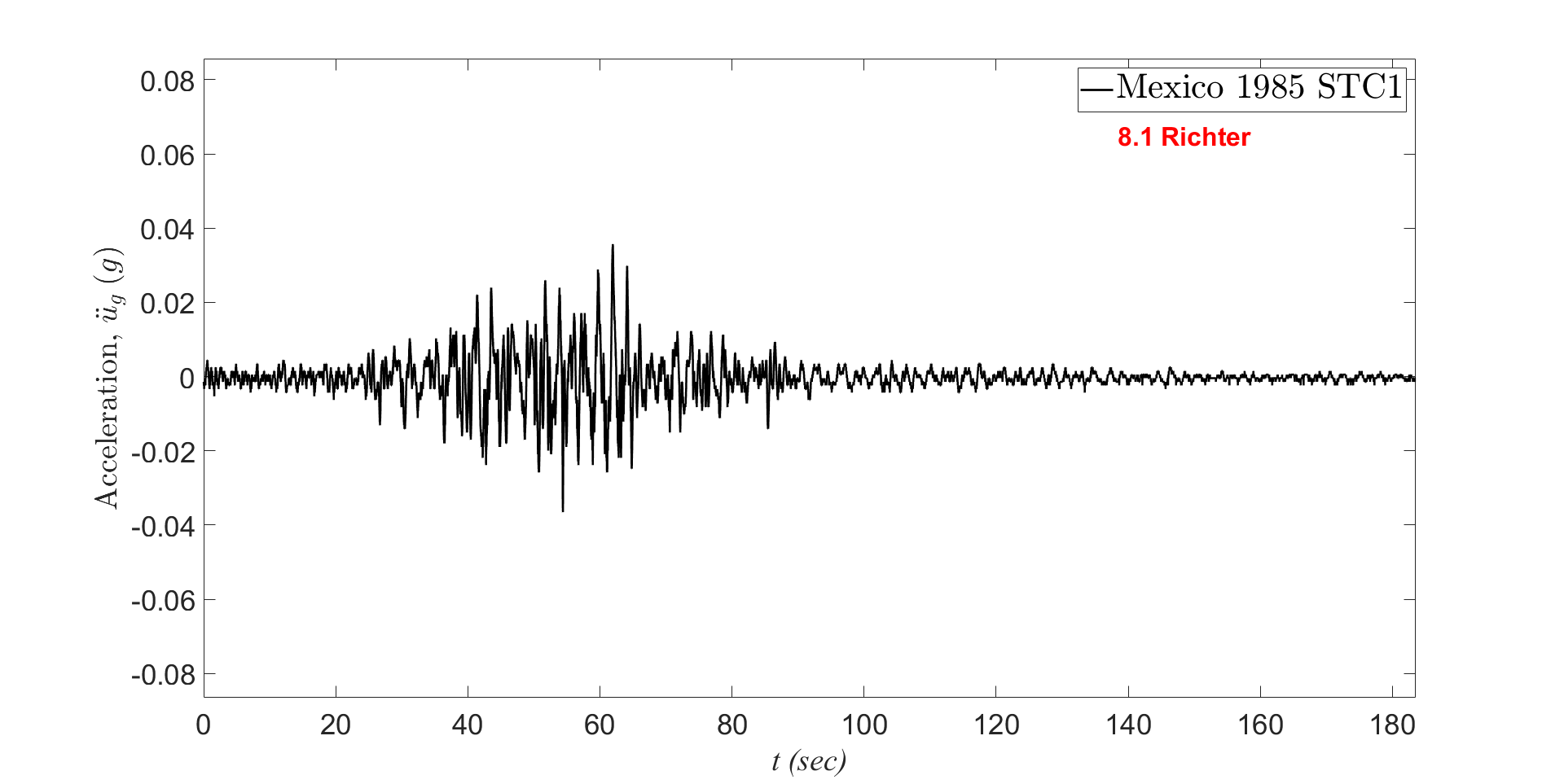
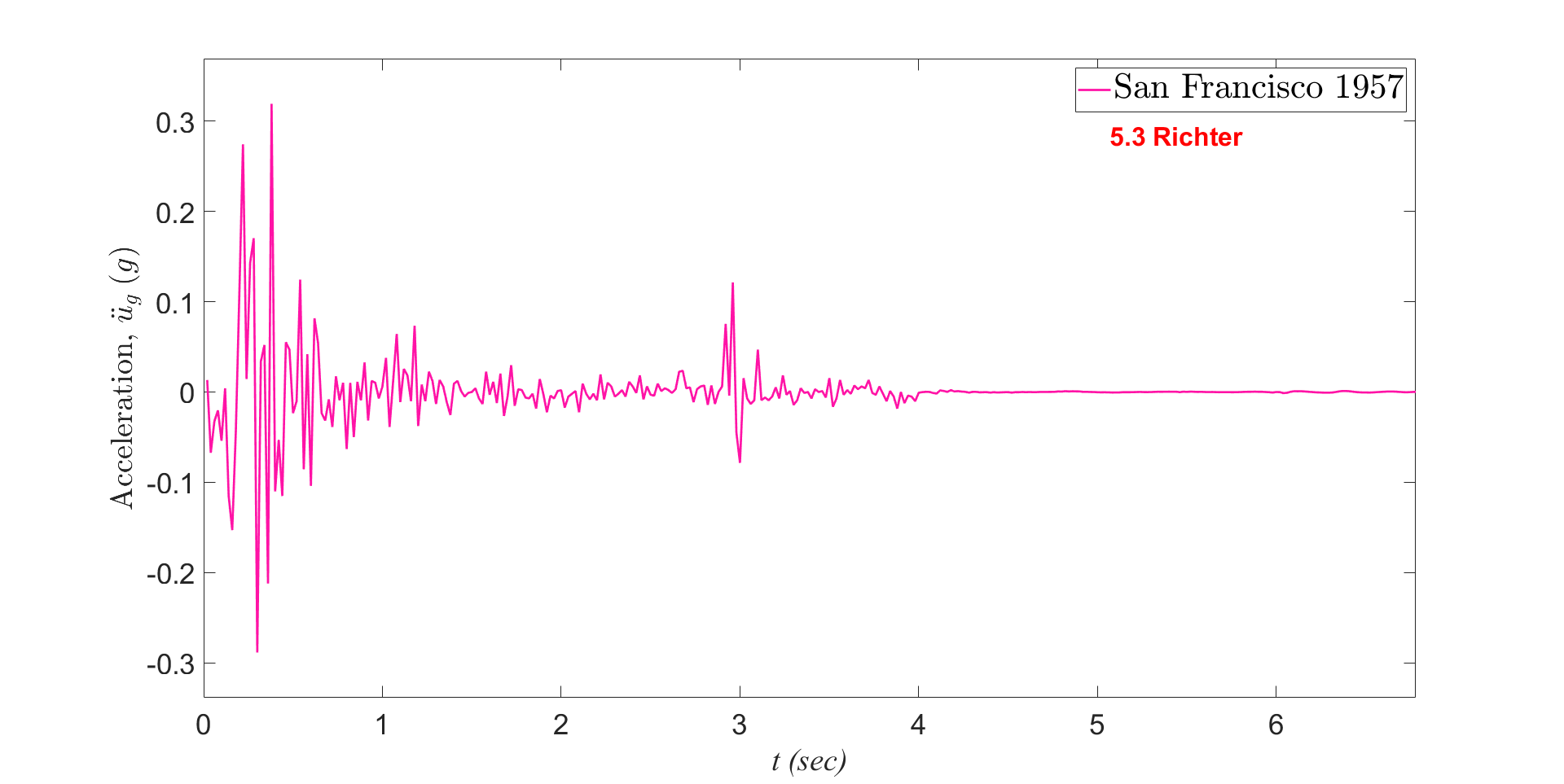
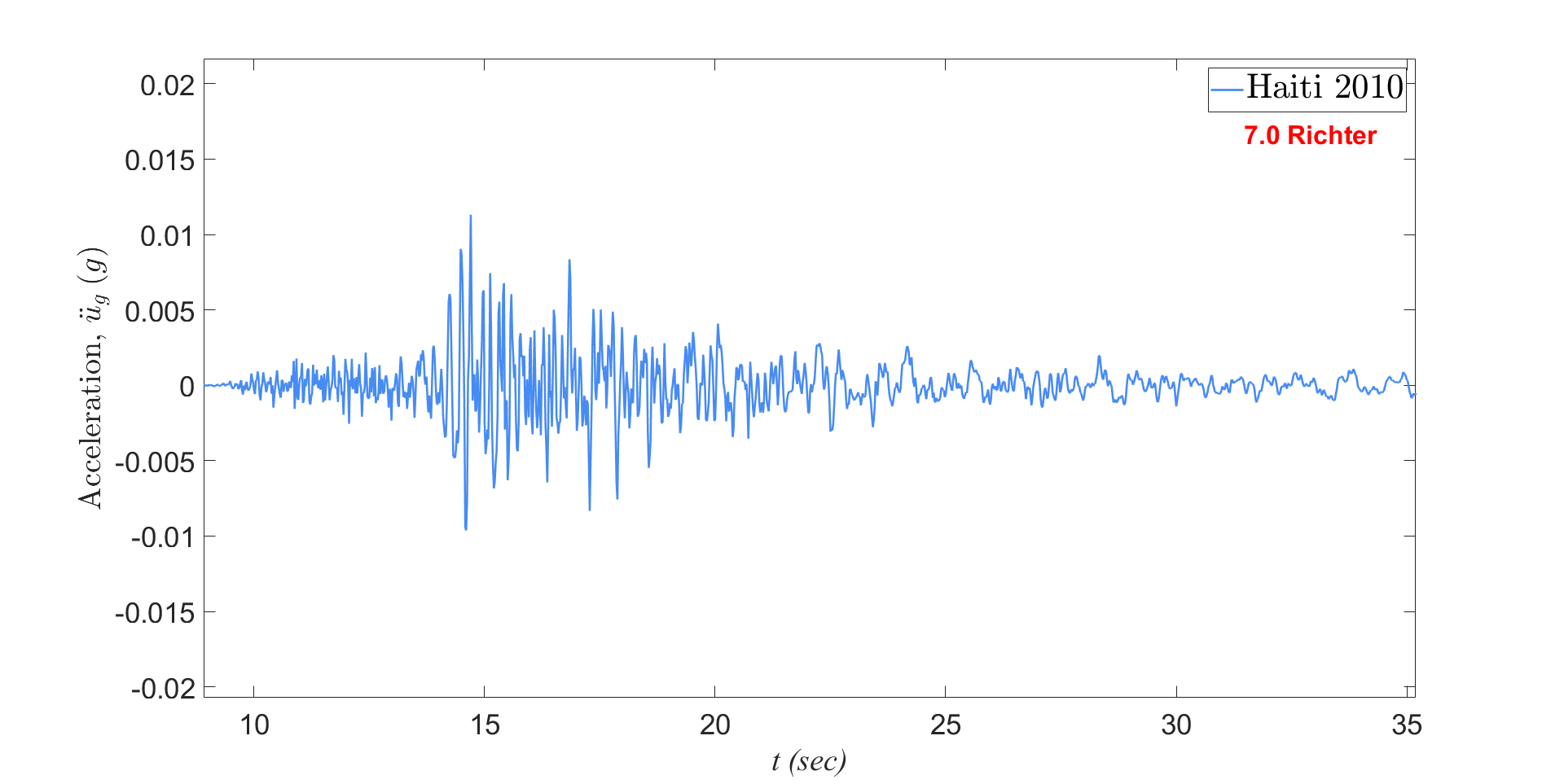
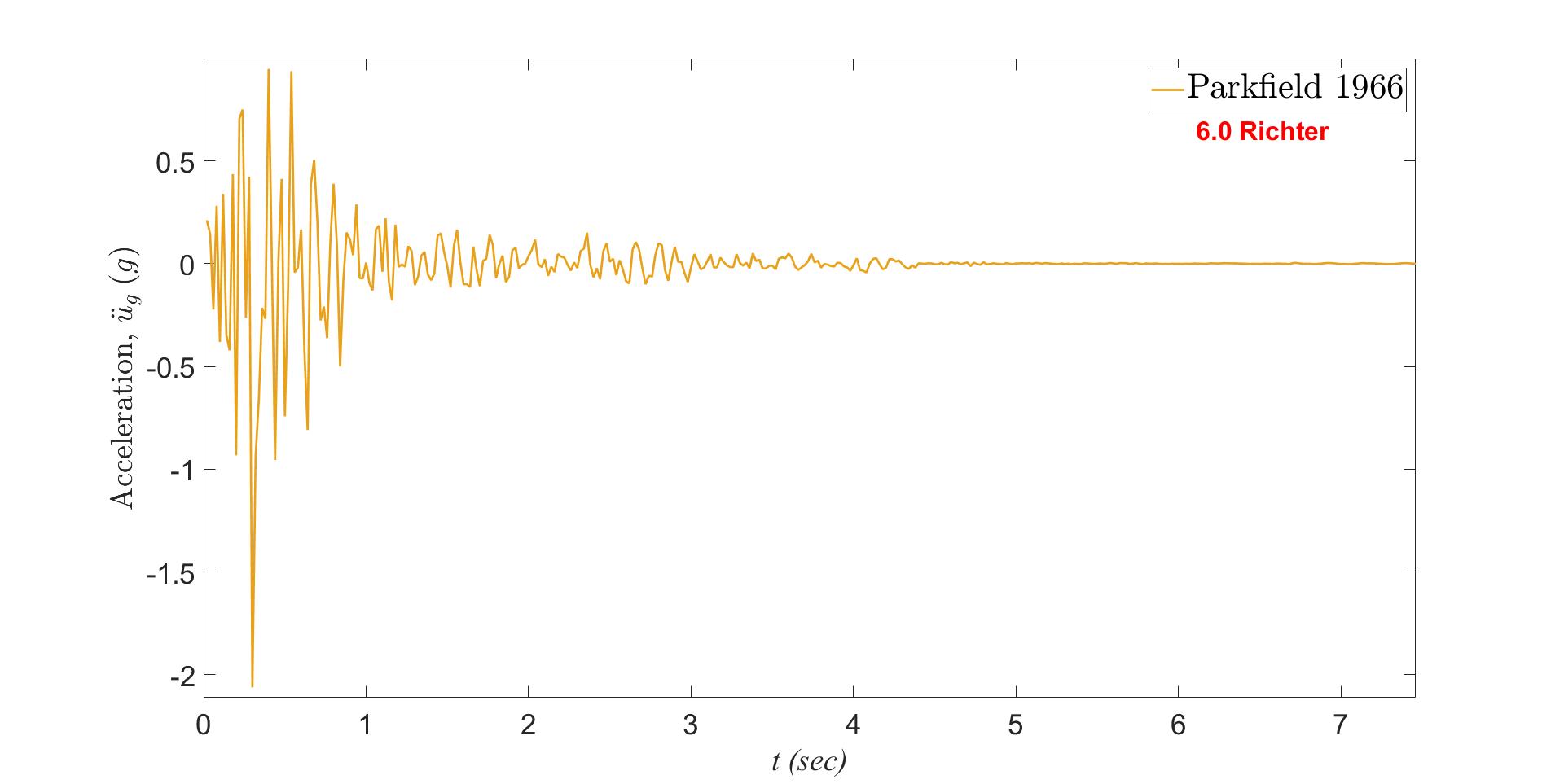
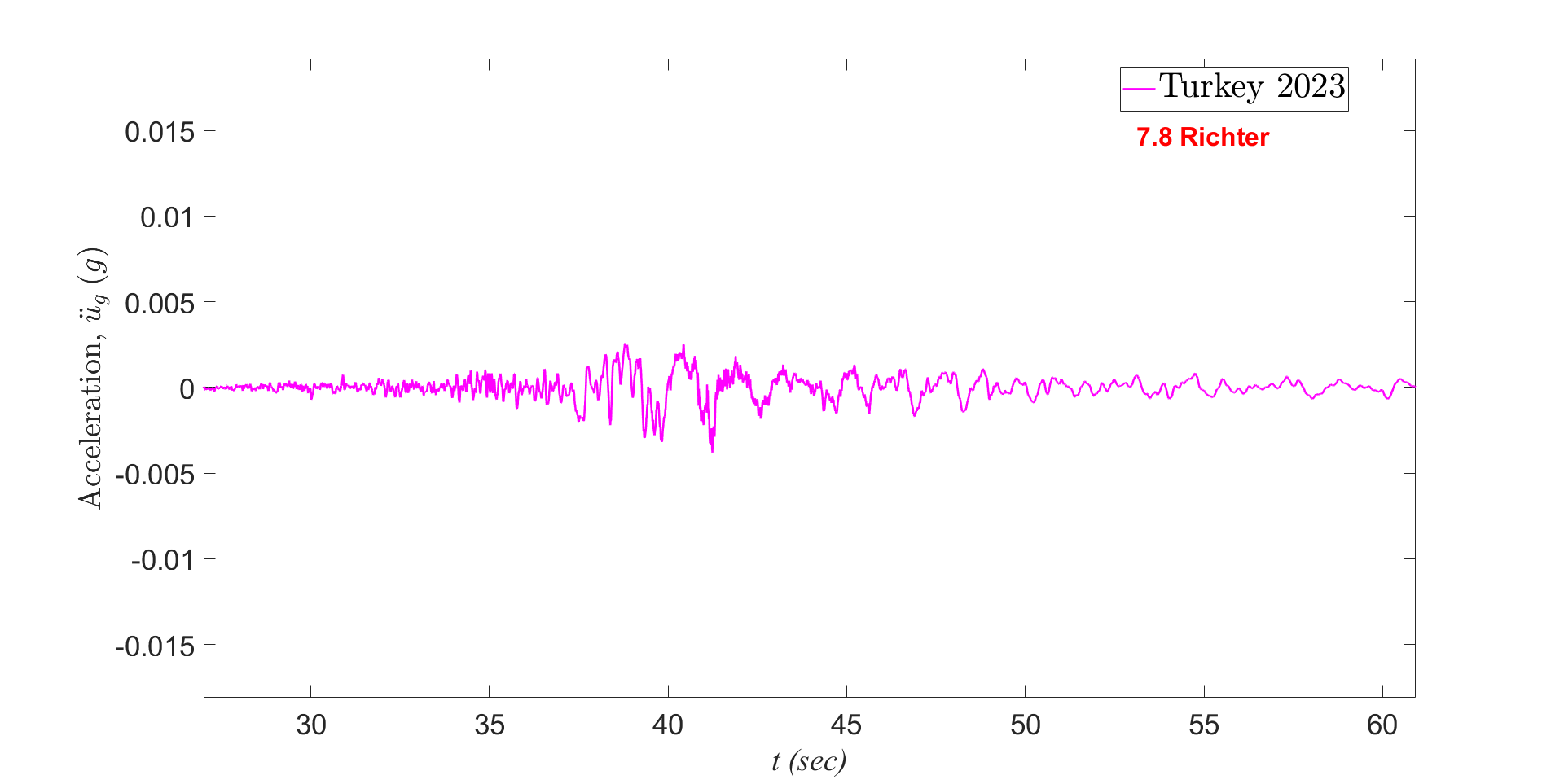
Earthquakes create catastrophic failure in structures from ground motions. It is imperative to understand how these loads are transmitted throughout each element and connection within the structure so that a safe design is obtained. Over the years, considerable advances have been made in earthquake-resistant design of structures, and seismic design requirements in building codes that have steadily improved. As earthquake-resistant design has moved from an emphasis on structural strength to emphasize on both strength and ductility, the need for accurate predictions of ground motions is important.
.
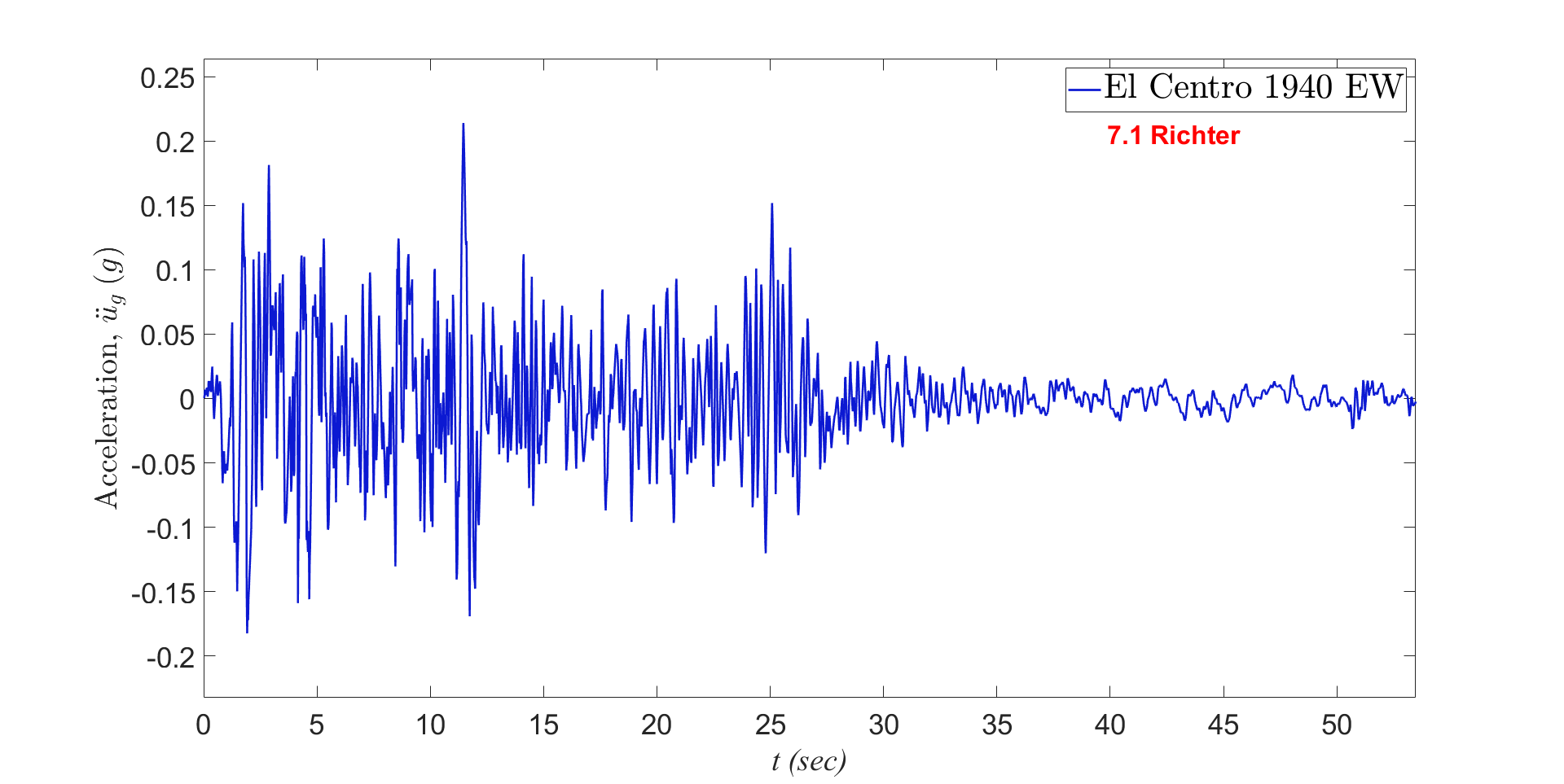
Ground motions recorded during several earthquakes
The most common set of frequency content parameters found in wind and earthquakes involves the use of a Spectrum. A Fourier series shows how the amplitude of the time history of wind velocity or earthquake acceleration, is distributed with respect to frequency. While a Fourier spectrum focuses on the amplitudes and frequency content of the time history itself, most engineers prefer the use of a structural response spectrum instead. Response spectrum plots the maximum response of a series of single-degree-of-freedom oscillators with respect to frequency or period. A structural building must specify a level of damping to counteract excessive loading.
.
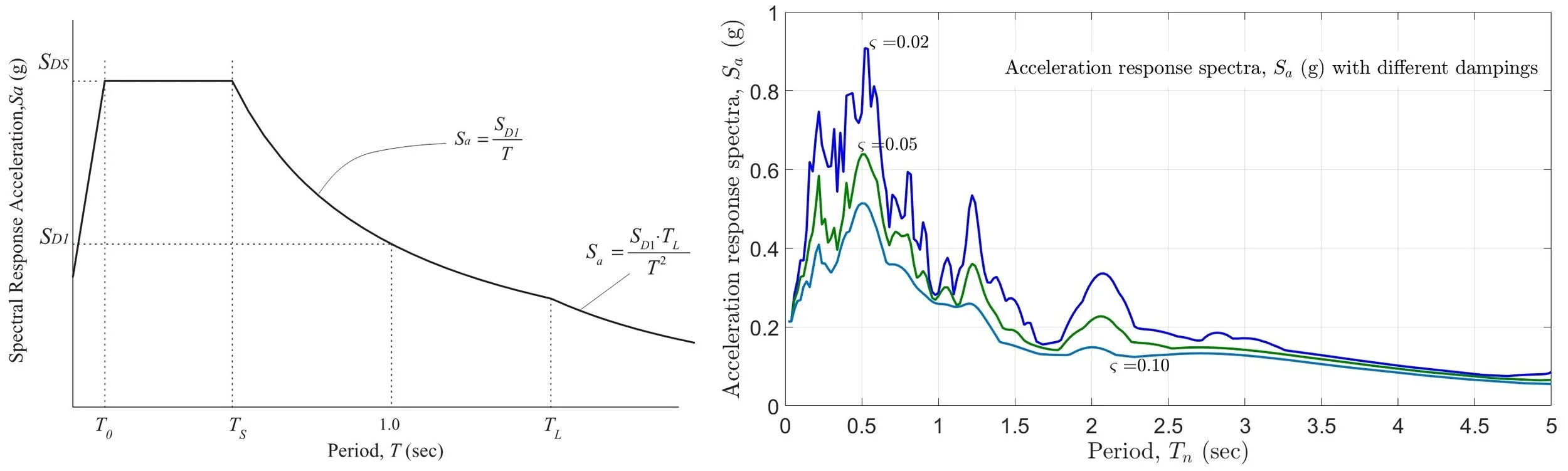
Acceleration response spectra from ASCE 7-22 and El Centro 1940 earthquake for various damping ratios
Atmospheric Boundary Layer (ABL) winds affecting a low-slope, low rise building. Blue contours depict negative suction pressures and red contours depict positive pressures.
Downburst winds affecting a low-slope, low-rise building
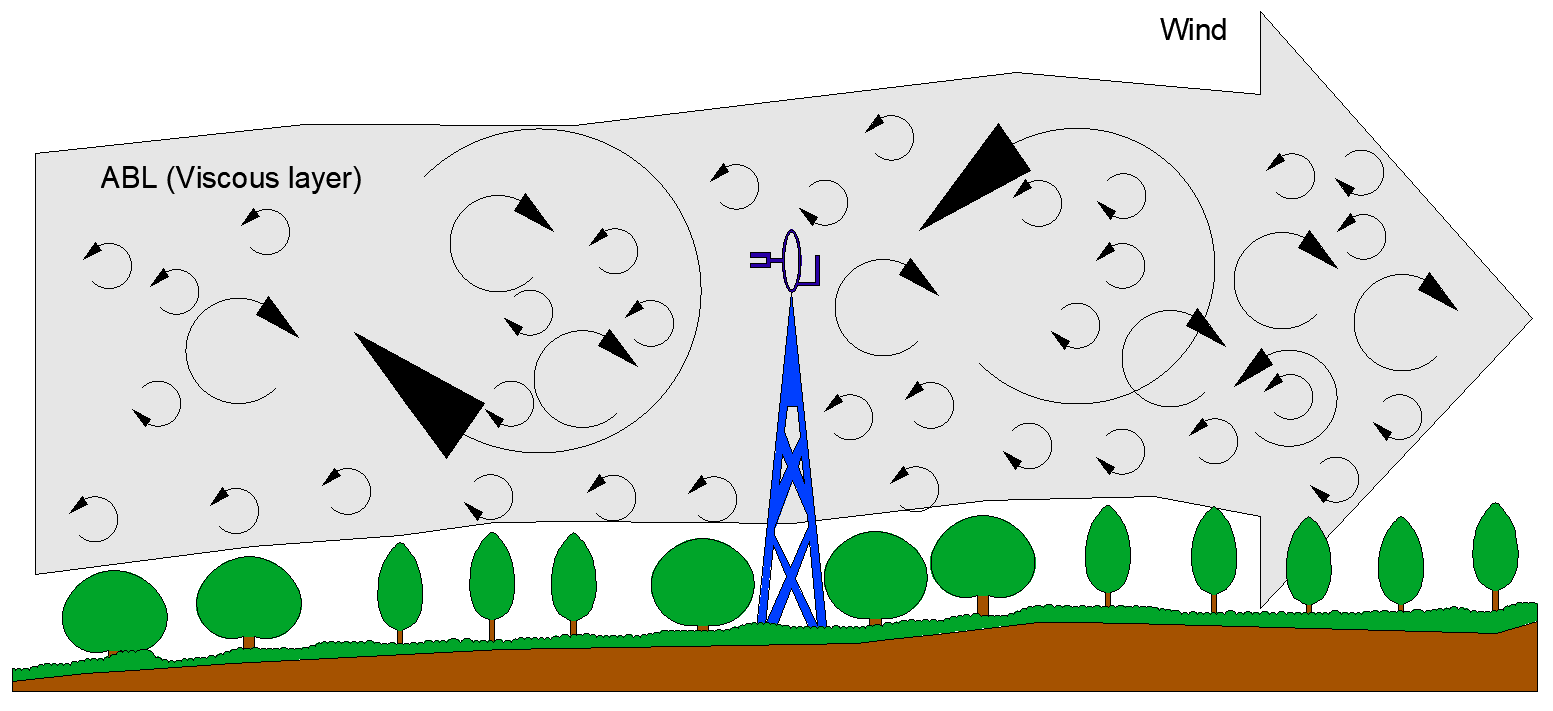
Schematic representation of ABL wind turbulence in the environment
Wind turbulence presence in the infrastructure
Wind turbulence in the infrastructure refers to the rapid, stochastic fluctuations found in wind speed and direction caused by air flowing over complex physical environments. Managing these forces is critical for structural integrity, energy efficiency, and public safety. Wind turbulence parameters such as turbulence intensity, integral length scales and power spectrum are three major parameters that are used to measure the level and severity of turbulence affecting structures. These parameters help engineers better design structures to resist these fluctuating forces due to the random and uncertain nature of wind. Turbulence will increase in rougher terrains, crowded surroundings like adjacent buildings or obstacles, and will create irregular shedding of wind eddies and applied forces in different directions causing discomfort and collapse of structures due to the effects of detrimental wind pressures.